May 1 – Full Moon
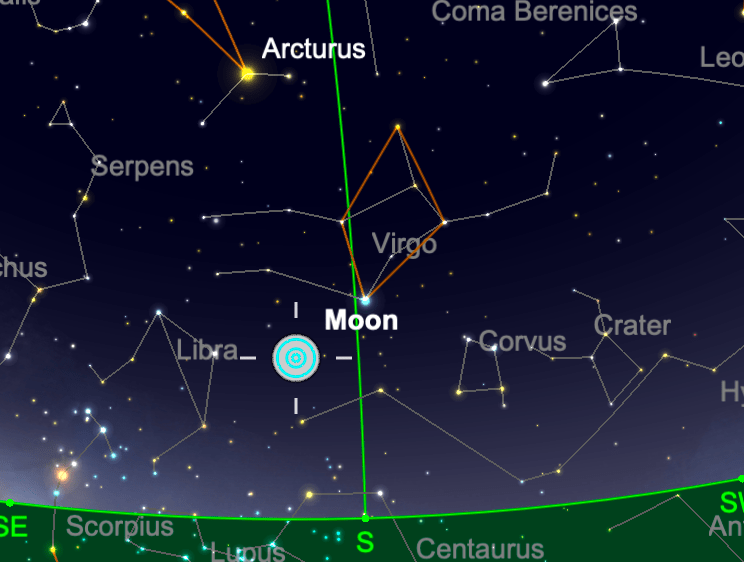
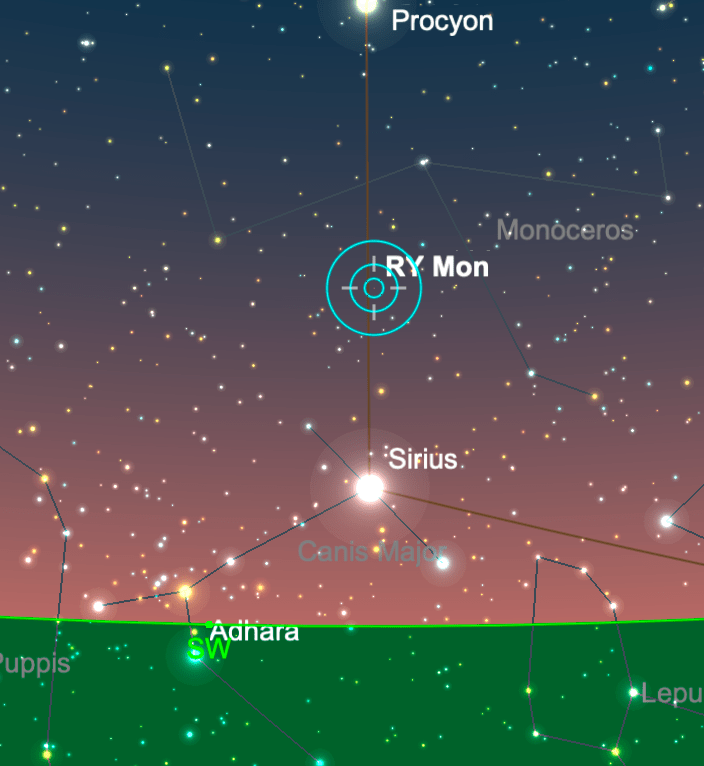
Carbon Star RY Mon best in evening
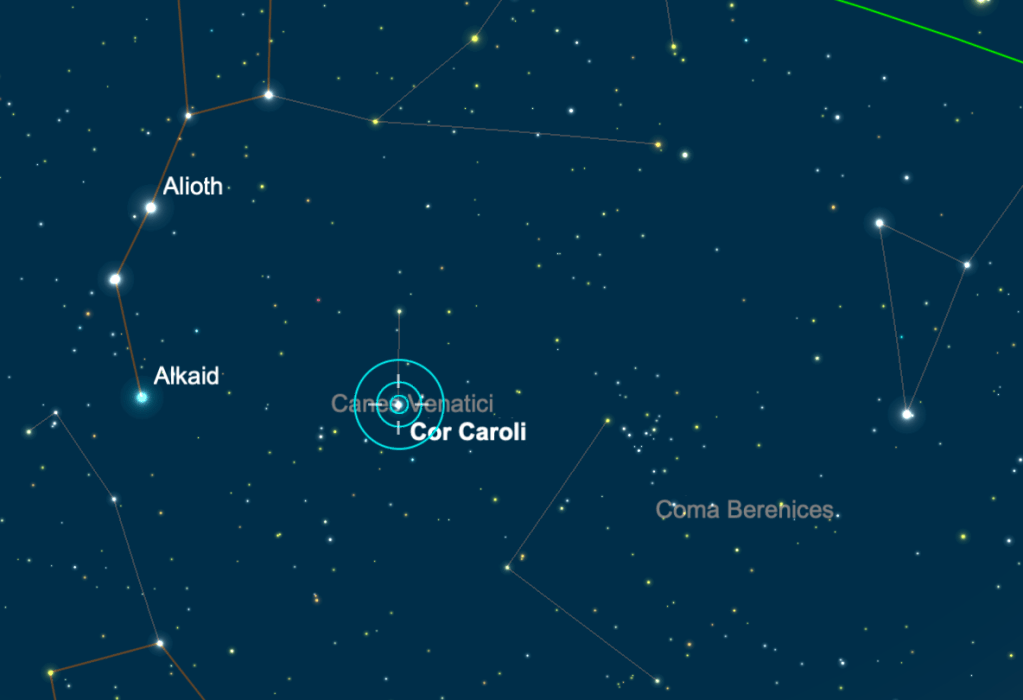
May 2 – Alpha CVn Colourful Double
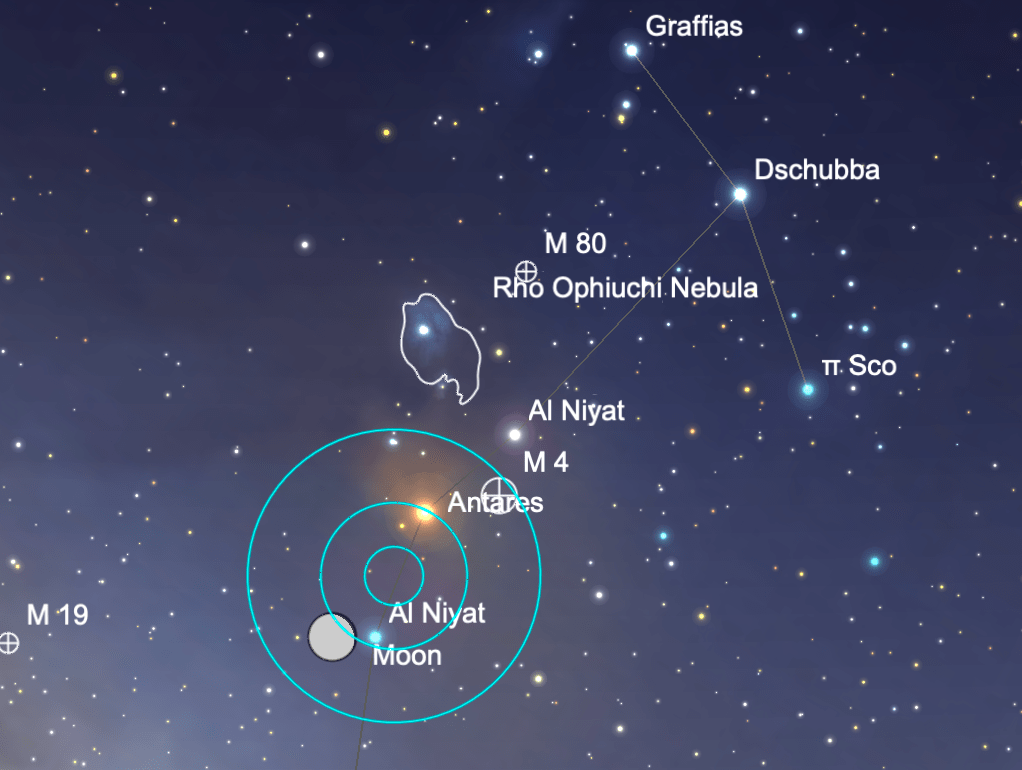
May 3 – Antares 0.5-degrees N of Moon
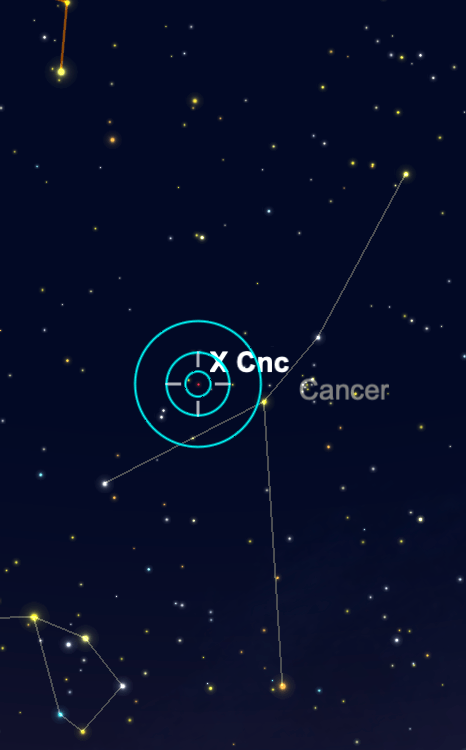
May 4 – Carbon Star X CnC best in evening
May 6 – Eta Aquaria Meteors best in predawn skies but 3/4 Moon interferes
May 7 – Markarian’s Chain well placed
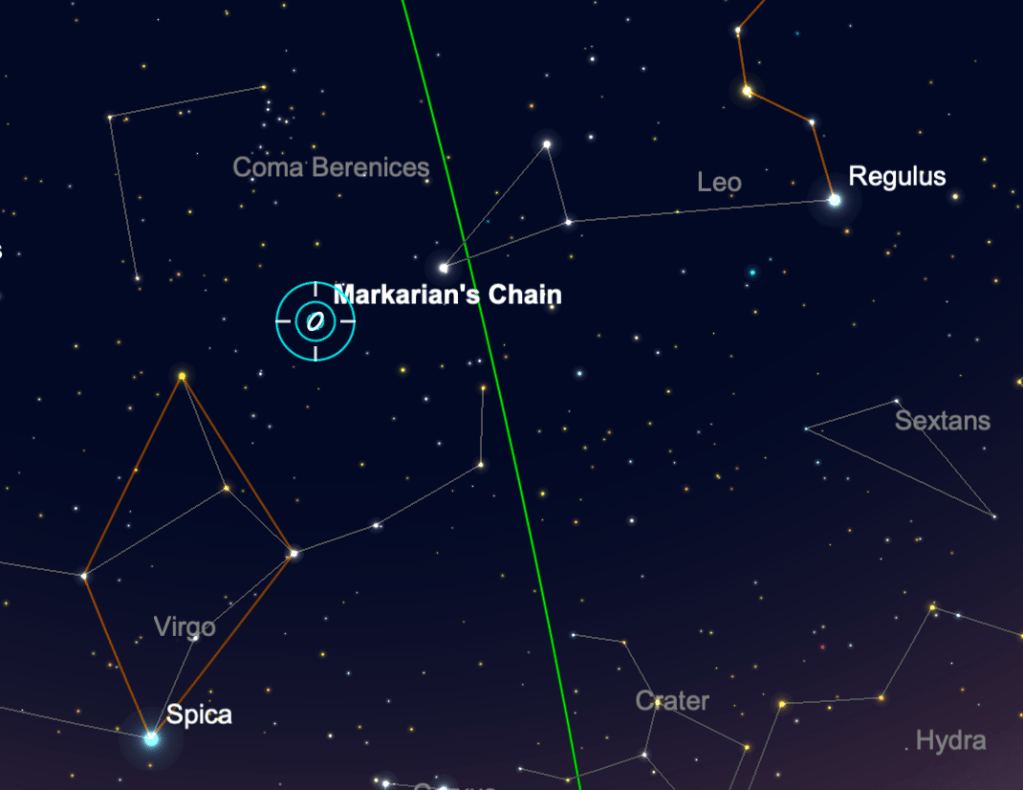
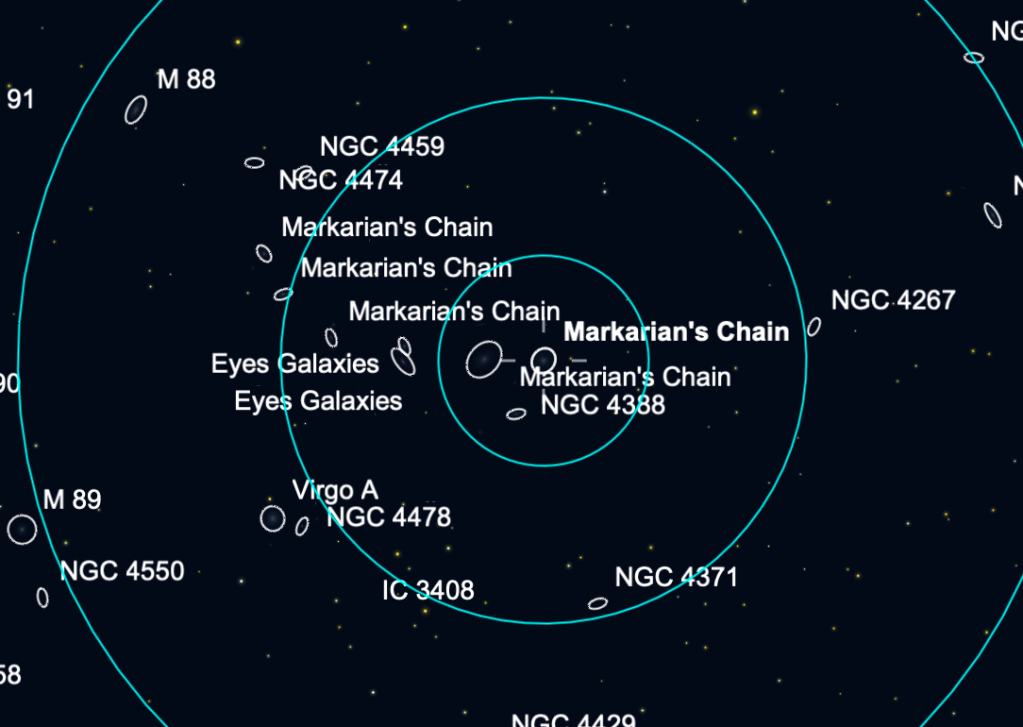
Key Details of Markarian’s Chain
- Location: Situated in the constellation Virgo, between the stars Denebola and Vindemiatrix, part of the larger Virgo Cluster.
- Key Members: The chain is anchored by the large elliptical galaxies M84 and M86. Other notable members include NGC 4477, NGC 4473, NGC 4461, NGC 4458, and NGC 4438.
- Observation: The brightest members are visible in small telescopes, but it is a popular target for astrophotography in the spring, often requiring a wide field of view to capture the entire string.
- Interaction: While some galaxies are randomly aligned, at least seven members share a common physical motion. The pair NGC 4438 and NGC 4435, known as “The Eyes,” are actively interacting and distorting one another.
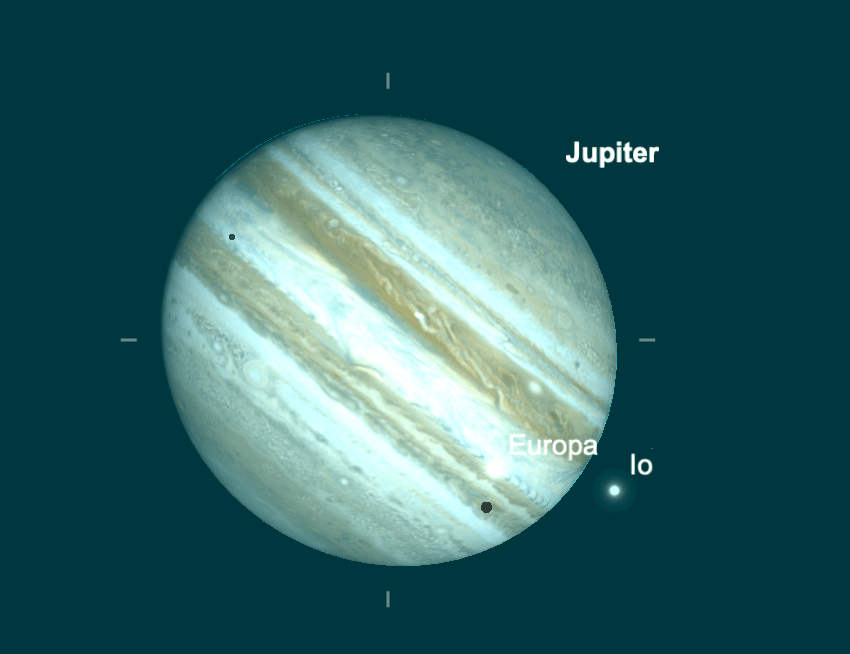
May 8 – 2 Shadows on Jupiter Ganymede & Europa 8:44pm EDT Eastern North America
May 9 – Last Quarter Moon
NGC 4147 well placed
May 10 – Lunar Curtis X visible
May 11 – NGC 4038/4039 well placed
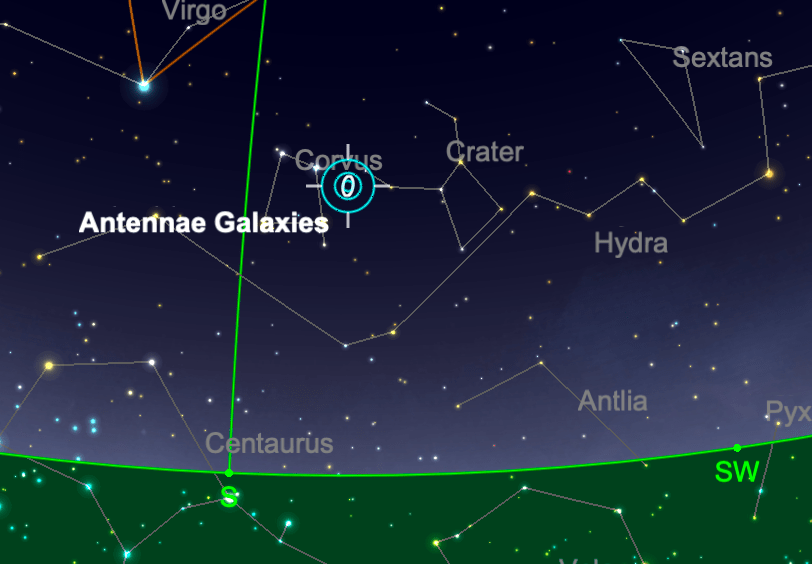
Key Facts About NGC 4038/4039:
- Location: Constellation Corvus, the Crow.
- Distance: Generally estimated between and million light-years.
- Other Names: Caldwell 60/Caldwell 61, the Antennae Galaxies, NGC 4038/4039.
- Discovery: Found by William Herschel in 1785.
- Interaction Type: Colliding/Merging galaxies.
- Appearance: The collision produces long tidal tails of stars, gas, and dust resembling insect antennae
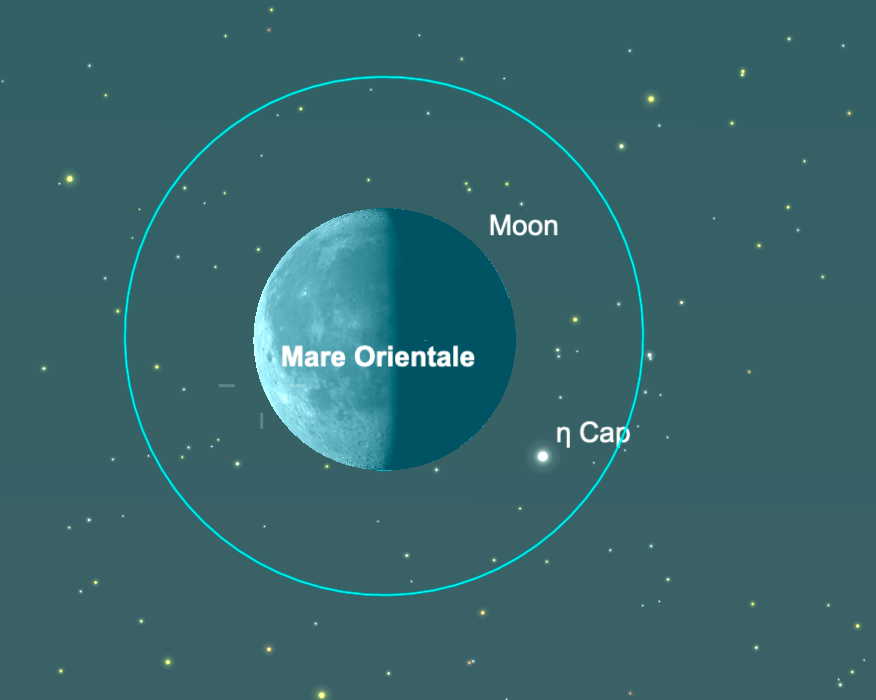
May 12 – Mare Orientale
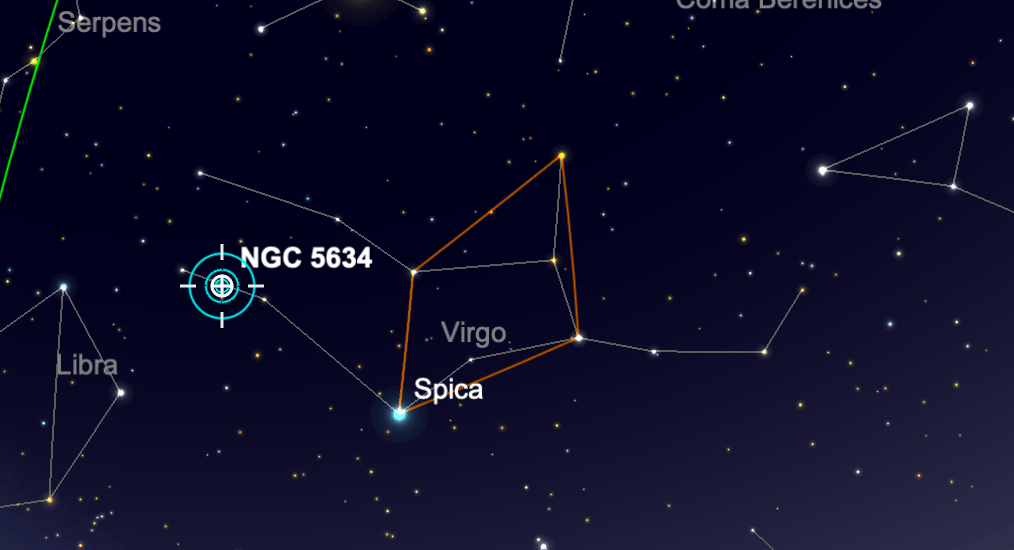
May 13 – NGC 5634 well placed
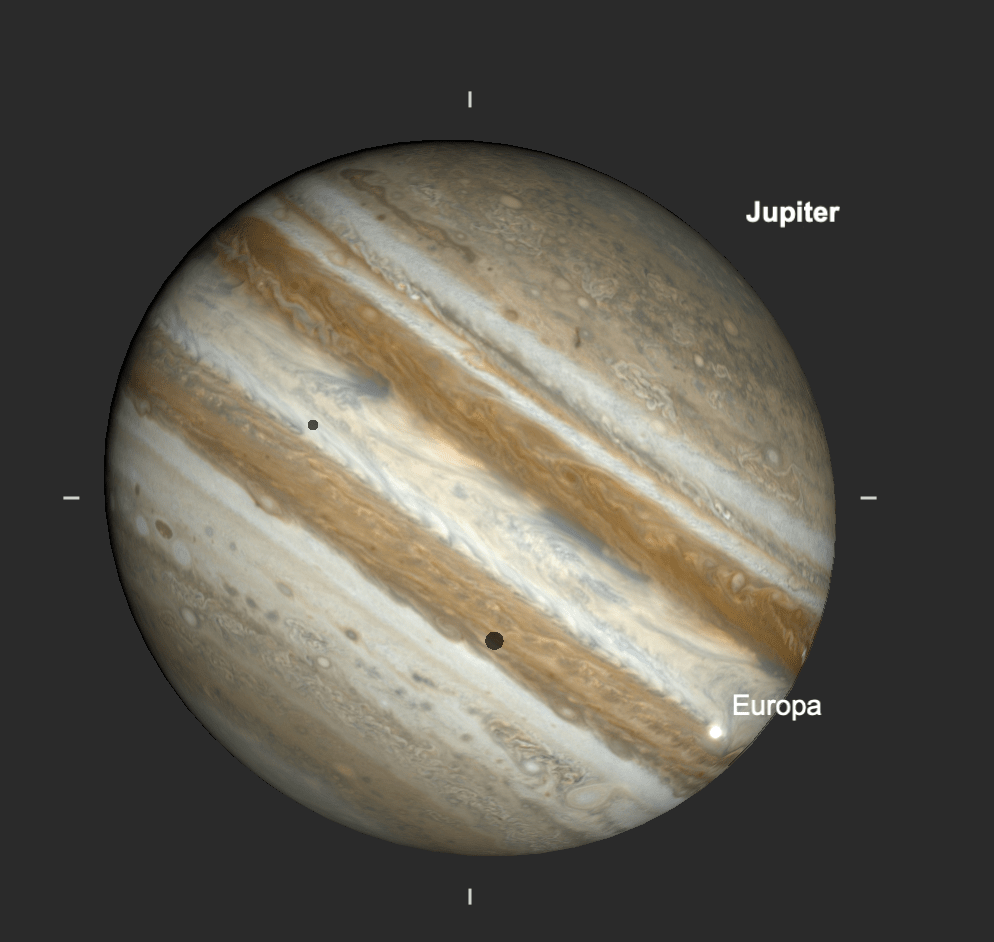
May 15 – Ganymede & Europa shadows visible on Jupiter 11:19 pm EDT
May 16 – New Moon but Old crescent in east before Sunrise today.
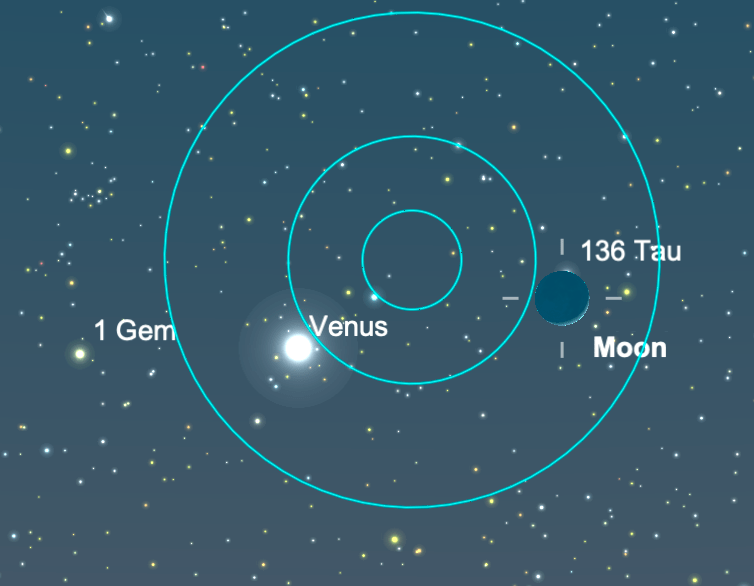
May 18 – Venus 3-degrees S of Moon
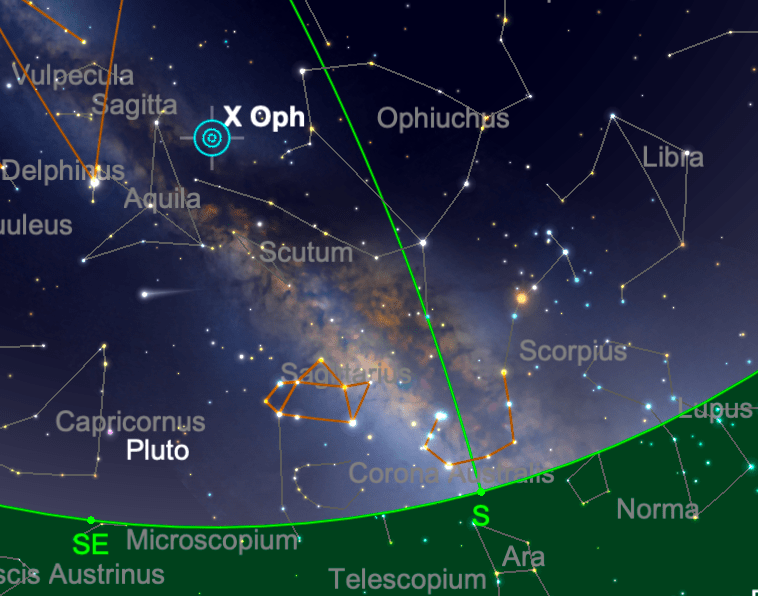
May 19 – Long period star X Oph at max 11:30pm
May 20 – Jupiter 3-degrees S of Moon – Not here
May 22 – Ganymede & Europa shadows visible on Jupiter 11:54 PM EDT WEST Fav.
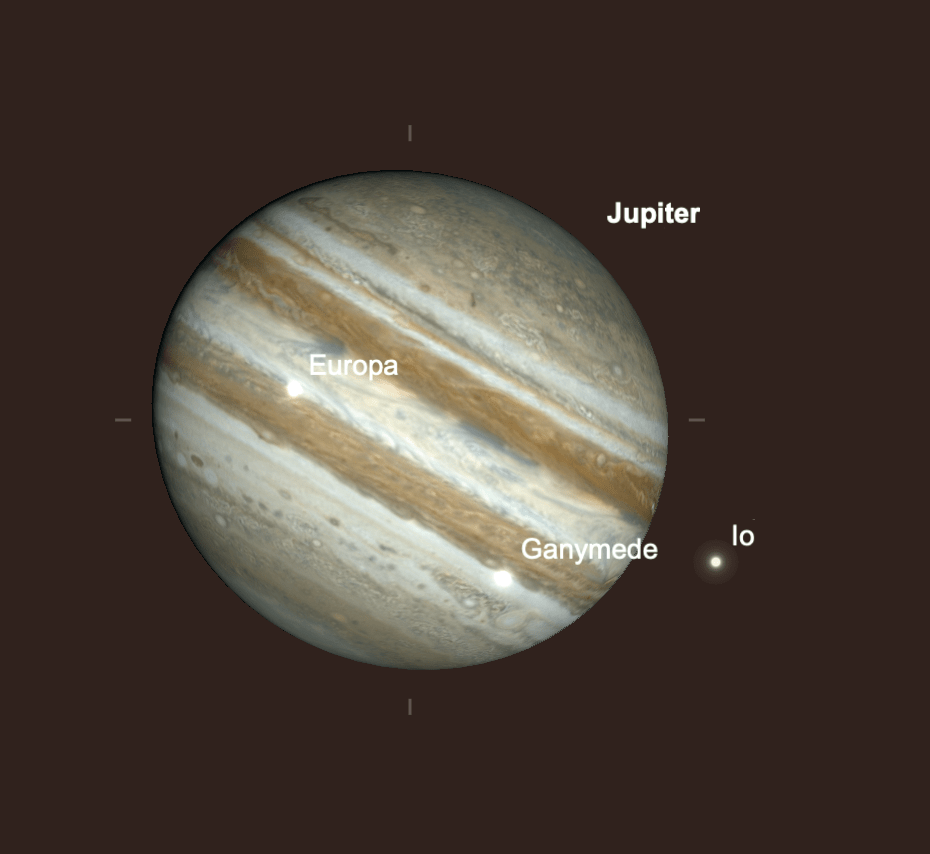
May 23 – Callisto & Io discs visible on Jupiter 10:15pm
May 25 – Lunar Straight Wall visible also Longomontanus Ray
May 26 – Jewelled Handle
A monthly lunar phenomenon occurring around the first quarter moon (approx. 10–11 days after new moon). It appears as a bright, illuminated arc formed by sunlight hitting the peaks of the Montes Jura mountain range, which separates the dark night side from the bright day side, making it look like a handle attached to the moon
May 29 – Asteroid Amphitrite at opposition M=9.5
29 Amphitrite is one of the largest S-type asteroids in the Main Belt, orbiting the Sun between Mars and Jupiter. Discovered on March 1, 1854, by Albert Marth, it was the only asteroid he ever found and is named after the Greek sea goddess Amphitrite, wife of Poseidon.
May 30 – Asteroid Lutetia at Opposition M=9.8
21 Lutetia is a large, irregularly shaped asteroid in the main asteroid belt, measuring approximately 120 kilometers along its longest axis. It is highly significant to astronomers as a “survivor” or planetesimal from the early formation of the Solar System, roughly 4.5 billion years ago
May 31 – Full moon

